
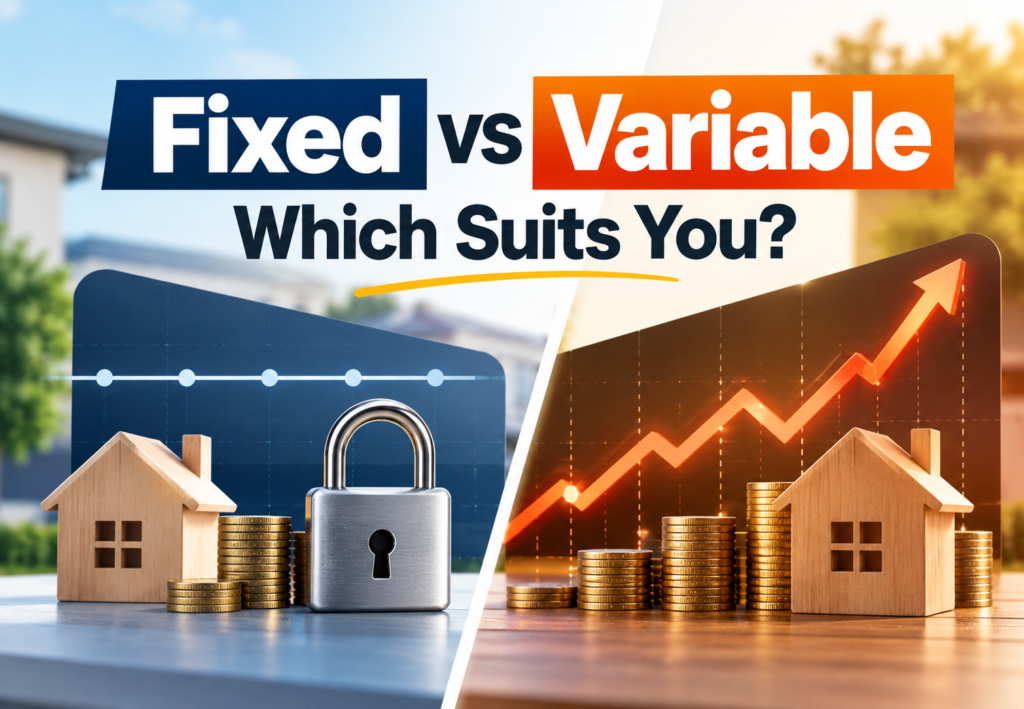
This is usually the first real decision a borrower makes, and there’s no universally correct answer, it depends on how much certainty you value versus how much flexibility you need.
How a variable rate works
A variable rate moves up or down over the life of the loan, in line with the lender’s own pricing decisions, which are themselves influenced by the RBA cash rate and the lender’s funding costs. Your repayments change when the rate changes.
Advantages:
- Usually comes with more features, offset accounts, redraw facilities, unlimited extra repayments
- You benefit immediately if rates fall
- Easier and cheaper to refinance or switch loans if a better deal appears
Trade-offs:
- Your repayments can rise without warning if rates increase
- Harder to budget precisely over a multi-year horizon
How a fixed rate works
A fixed rate locks in your interest rate for a set period, typically one to five years, after which the loan usually reverts to a variable rate unless you choose to fix again.
Advantages:
- Repayments stay identical for the fixed term, useful for tight household budgeting
- Protection if rates rise during your fixed period
Trade-offs:
- You don’t benefit if rates fall during your fixed term
- Extra repayments are often capped, sometimes only $10,000 to $30,000 per year, with break costs applying if you exceed the cap or exit early
- Offset accounts and redraw are often limited or unavailable
- Refinancing during the fixed period can trigger break costs, which can be significant if rates have moved a lot since you fixed
A middle path: split loans
A split loan divides your borrowing into a fixed portion and a variable portion, in whatever ratio you choose. This lets you lock in certainty on part of your repayment while keeping flexibility, and access to features like offset, on the rest. It’s a reasonable option if you’re genuinely torn rather than leaning clearly one way.
Questions worth asking yourself
How tight is your budget? If a rate rise of even 0.5 to 1 percentage point would genuinely strain your household budget, the certainty of a fixed rate has real value, independent of whether it turns out to be the “cheaper” choice in hindsight.
Do you expect to need extra repayment flexibility? If you’re planning to pay down the loan aggressively, receive irregular income, or expect a windfall (inheritance, bonus, sale of another asset) you might want to apply to the loan, a variable rate’s unlimited extra repayments and redraw access matter more than they might first appear.
Are you likely to sell or refinance within the fixed term? If there’s a real chance you’ll sell the property or want to switch lenders within the next one to five years, the break costs attached to exiting a fixed loan early are worth weighing carefully before you lock one in.
What do rate expectations look like right now? This isn’t something to guess at from headlines alone. Check our rate trend data for the current trajectory, and consider that fixed rates already price in what the market expects to happen, so a fixed rate that looks “high” relative to today’s variable rate may reflect an expectation that variable rates will rise to meet it.
There’s no permanent decision here
Whichever you choose now isn’t locked in forever, once a fixed term ends, or if your circumstances change, you can revisit the decision. Treat it as the right choice for your situation today, not a decision you need to get perfect for the next 25 years.